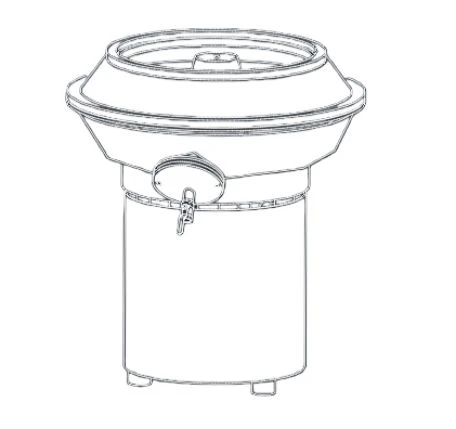
If you’ve ever stood beside a running rotary barrel machine on a production floor, you know that motor performance isn’t just a technical detail—it’s the backbone of your entire operation. I’ve been supplying rotary barrel machines for over a decade, and I’ve lost count of the times a customer has called me in a panic because their motor crapped out mid-batch, throwing their production timeline and product quality off. The truth is, upgrading your rotary barrel machine’s motor isn’t just a repair. It’s one of the highest ROI upgrades you can make to improve efficiency, reduce downtime, and extend the life of your equipment. But do it wrong, and you’ll waste money or even damage your barrel. Let’s walk through how to do this the right way, with the practical insights I’ve picked up working side-by-side with machine operators, maintenance teams, and plant managers every day. Rotary Barrel Machine

First, let’s talk about why upgrading your rotary barrel machine motor is even worth your time. A lot of plant owners see their rotary barrel as a “set it and forget it” workhorse—used for everything from metal parts finishing to food product coating or chemical mixing. Your rotary barrel’s motor doesn’t just spin the barrel; it controls the rotation speed, torque, and consistency of that spin. If you have an old, worn, or mismatched motor, you’ll run into issues like inconsistent mixing, parts that don’t coat evenly, or even motor burnout that forces you to shut down production for days.
I had a customer in automotive parts finishing a couple years back who was using a 2-horsepower (HP) induction motor in their 50-gallon rotary barrel. They were running metal fasteners that required a tight, consistent rotation to avoid scratching the finish, but their old motor was surging every time the barrel hit a certain load point. They were seeing a 12% rejection rate on finished parts because of uneven coating, and their motor was burning out every 18 months, costing them thousands in repairs and downtime. When we upgraded them to a 3-HP variable frequency drive (VFD) motor matched to their barrel’s torque requirements, their rejection rate dropped to under 2%, and their motor now runs 4 years with no issues. That’s not just a small improvement—that’s a direct bottom-line win.
Before you jump online and buy any random motor, you need to do your homework on your current setup and your operation’s needs. Skipping this step is the number one mistake I see people make. Let’s break down the key specs you need to gather first.
First, know your barrel’s size and current load. Rotary barrels come in all sizes, from small 5-gallon lab models to 1000-gallon industrial units. The load inside the barrel—parts, media, liquid, whatever you’re processing—determines how much torque your motor needs to deliver. If you’re running a small barrel with light parts, a over-sized motor will waste energy; if you’re running a large barrel with heavy industrial media, an under-sized motor will struggle, burn out quickly, and cause inconsistent rotation.
Next, check your existing motor’s specs: HP, voltage, phase (single or three-phase), and mounting type. Mounting is huge—if your new motor doesn’t fit the bolt pattern on your barrel’s drive shaft, you’ll have to do custom machining, which adds cost and downtime. I once had a customer in a rural machining shop who ordered a motor online without checking their mounting, and ended up paying $800 to have a custom adapter made because the bolt pattern didn’t match. He told me it was a $200 mistake that cost him more than the motor itself. Also, check your power supply: if your plant only has single-phase power, a three-phase motor won’t work without additional equipment, so you’ll need to plan for that.
Then, think about your operation’s goals. Are you looking to improve speed control? Reduce energy costs? Run heavier loads? Cut down on maintenance downtime? If you just need a like-for-like replacement, that’s simpler, but if you want to level up performance, you’ll want to consider different motor types.
Now, the main decision point: what type of motor is right for your rotary barrel machine? The two most common options for industrial rotary barrels are standard induction motors and VFD (variable frequency drive) motors. Let’s break down the pros and cons of each, based on what I’ve seen work in real plants.
Standard induction motors are the workhorses of industrial equipment. They’re cheap, reliable, and easy to find. If your current motor is working mostly fine, and you just need a direct replacement for a light-to-medium load, an induction motor might be all you need. But here’s the catch: induction motors run at a fixed speed. Rotary barrels often need precise speed control—different processes require different rotation speeds. For example, if you’re coating pharmaceutical tablets, you need a slow, steady spin to avoid chipping the coating; if you’re tumbling metal parts to remove rust, you might need a faster, more aggressive spin. A fixed-speed induction motor can’t adjust for that, so you might be either underperforming or wasting energy running at a speed that’s too high or low.
That’s where VFD motors come in—and this is almost always the upgrade I recommend for most customers, especially if they want to improve efficiency. A VFD motor is paired with a variable frequency drive, which lets you adjust the motor’s speed and torque on the fly. That’s a game-changer for rotary barrel machines. With a VFD, you can fine-tune the rotation speed to match your specific process, reduce energy use by up to 30% (because you don’t run the motor at full speed when you don’t need to), and even get softer starts, which reduce wear and tear on your barrel’s drive system and bearings. The automotive customer I mentioned earlier was using a fixed-speed motor that ran at full speed all the time, even when they were running light batches. The VFD let them slow down for small batches and speed up for heavy ones, cutting their energy bill by 25% alone.
Another thing to consider: efficiency ratings. Not all motors are created equal when it comes to energy efficiency. Most industrial motors on the market are either standard efficiency, high efficiency (IE3), or premium efficiency (IE4). The higher the efficiency rating, the less energy the motor wastes as heat. Premium efficiency motors cost more upfront, but they pay for themselves in energy savings over time. For example, a 5-HP premium efficiency motor uses about 1,000 kWh less per year than a standard efficiency motor, which translates to $100-$150 in savings depending on your local energy rates. For a motor that lasts 15 years, that’s $1,500-$2,250 in free money—more than covering the difference in upfront cost. I always recommend IE3 or higher for upgrades; the small extra cost is worth it in the long run, especially with energy costs rising every year.
Now, let’s get into the step-by-step process of actually upgrading the motor, because there are a few critical safety and installation steps you can’t skip. I always tell my customers to treat motor upgrades like any industrial maintenance work—safety first, every time. No exceptions.
Step 1: Disconnect power and lock out/tag out (LOTO) the machine. This is non-negotiable. Lock out the circuit breaker so no one can turn the power on while you’re working. I’ve seen too many people skip this step and get injured—don’t be that person. Wear proper personal protective equipment (PPE): gloves, safety glasses, closed-toe shoes.
Step 2: Remove the old motor. Start by disconnecting the power leads from the motor, making note of how they’re wired (take a photo with your phone if you’re not sure—this will save you hours of troubleshooting later). Then, disconnect the drive belt or coupling connecting the motor to the barrel’s drive shaft. Next, remove the bolts holding the motor to the mounting base. Lift the old motor off—note its weight, some industrial motors are heavy, so use a hoist or ask a coworker to help if you need to.
Step 3: Prepare the new motor. Before you install it, make sure it’s mounted correctly. If the mounting bolt pattern is the same as the old one, you’re good. If it’s different, you’ll need to adjust the mounting base or install a custom adapter (as I warned you earlier). Also, check that the drive shaft on the new motor is the same size as the old one—if it’s too small, you’ll need a bushing, or if it’s too big, you’ll need to machine it down. This is why checking specs before buying is so important.
Step 4: Install the new motor. Bolt it securely to the mounting base. Reconnect the drive belt or coupling—make sure it’s tensioned correctly; too loose and it will slip, too tight and it will wear out the bearings quickly. Then, reconnect the power leads, following the wiring diagram (your photo from step 2 will save you here). If you’re upgrading to a VFD, you’ll also need to run the control wiring from the VFD to your machine’s control panel—this is a little more involved, so if you’re not comfortable with electrical work, hire a licensed electrician. I always recommend that for VFD upgrades, because miswiring a VFD can damage the motor or the control system.
Step 5: Test the motor. Before you put the barrel back into service, run a test. Turn the power on (make sure the LOTO is removed safely, following your plant’s procedures), start the motor at a low speed, and check for any unusual noises, vibrations, or overheating. Check that the drive belt or coupling is not slipping. If everything looks good, gradually increase the speed to your operating level, and run it for 10-15 minutes to make sure there are no issues. If you’re using a VFD, test adjusting the speed up and down to make sure it works as expected.
Wait—there’s one more important step that a lot of people miss when upgrading their motor: verifying that the upgrade doesn’t put extra stress on your rotary barrel machine’s other components. Your barrel has a drive shaft, bearings, and gearbox that are all sized for the original motor. If you upgrade to a much higher HP motor, you could put too much stress on these parts, leading to early failure. For example, if your barrel was originally designed for a 2-HP motor and you jump to a 10-HP motor, the gearbox will likely burn out quickly because it can’t handle the extra torque. I always recommend staying within 10-15% of your original motor’s HP for most upgrades, unless you’ve assessed that your barrel’s other components can handle a larger motor. If you want to go bigger, work with a supplier that specializes in rotary barrel machines (like us!) to do a full load calculation to make sure the rest of the machine is compatible.
I’ve also seen customers make the mistake of upgrading their motor but ignoring other related components. For example, if you have an old motor that’s been running for 10 years, chances are your drive belt, bearings, and gearbox are also worn. If you upgrade the motor without replacing these parts, the new motor will have to work harder to compensate for the worn parts, which can reduce its lifespan. I always suggest doing a full inspection of your barrel’s drive system at the same time as a motor upgrade—replace worn belts, lubricate bearings, and check the gearbox for wear. This way, you get the full benefit of the motor upgrade, not just part of it.
Now, let’s talk about common pitfalls to avoid, because even if you follow all these steps, you can run into issues. One big one is under-sizing the motor. I had a customer in a food processing plant a few years back who was running a 200-gallon rotary barrel for mixing dry ingredients. He upgraded to a 3-HP motor that was the same size as his old one, but he was running heavier batches of flour and sugar than he had been before. The motor would trip every time he loaded a full batch. We ended up upgrading him to a 5-HP motor with a higher torque rating, and that fixed the issue. The problem was that he matched the HP of the old motor, but not the torque needed for the new load. Always check torque, not just HP, when choosing a motor for heavier loads.
Another pitfall is ignoring electrical requirements. If your plant has single-phase power and you want a VFD, you’ll need a single-phase input VFD, not a three-phase. Trying to use a three-phase VFD on single-phase power will damage the VFD and the motor. I also recommend working with your electrician to make sure your circuit can handle the new motor’s power draw, especially if you’re upgrading to a higher HP motor. Overloading circuits can cause power outages or even electrical fires.
And finally, don’t forget about maintenance after the upgrade. A new motor is only going to last as long as you take care of it. Make sure you follow the manufacturer’s maintenance schedule: lubricate the motor as needed, check for loose bolts or wires, and inspect the drive belt and couplings regularly. I tell all my customers that a 10-minute monthly check-up can extend a motor’s life by years.
If you’re still on the fence about whether upgrading your rotary barrel machine motor is worth it, let’s go back to basics. The average industrial rotary barrel motor lasts 10-15 years. If your motor is over 10 years old, or if you’re dealing with inconsistent performance, high downtime, or high energy bills, an upgrade is almost always a smart investment. It’s not just about fixing what’s broken—it’s about making your entire operation more efficient, more reliable, and more profitable.
If you’re ready to upgrade your rotary barrel machine’s motor, we’re here to help. We’ve supplied rotary barrel machines and motor upgrades to hundreds of plants across industries, from automotive to food processing to metal finishing. We can help you assess your current setup, recommend the right motor and VFD for your needs, and even connect you with trusted local technicians for installation if you need it. Don’t let an old motor hold your operation back—reach out to us to discuss your upgrade needs today.
Magnetic Polishing Machine References:
- Electrical Apparatus Service Association (EASA). (2021). "Motor Upgrades: A Guide for Industrial Applications." EASA Technical Publication.
- National Electrical Manufacturers Association (NEMA). (2022). "Selecting Motors for Industrial Rotary Equipment." NEMA Standard MG 1-2022.
- Occupational Safety and Health Administration (OSHA). (2020). "Lockout/Tagout (LOTO) Standards for Industrial Machinery." OSHA 29 CFR 1910.147.
- US Department of Energy. (2023). "Energy Efficiency Improvement Guidelines for Industrial Motors and Drives." DOE/GO-102023-6254.
KS Lab Finishing Co., Ltd.
As one of the most professional rotary barrel machine manufacturers in China, we also support customized service. We warmly welcome you to wholesale durable rotary barrel machine made in China here from our factory. If you have any enquiry about pricelist, please feel free to email us.
Address: No.11-14, Yantian Shuibei Commercial Street, Fenggang Town,Dongguan,China
E-mail: sales@kslabfinishing.com
WebSite: https://www.kslabfinishing.net/
