Hey guys, let’s talk about something I get asked ALL the time as a dual OTG USB drive supplier: what even is a dual OTG USB drive? I’ve lost count of how many times a customer hits me up like “wait, so my regular USB won’t work with my phone? That’s why I’ve been struggling?” Yeah, that’s a real conversation I had last week, actually. Let’s break this down like we’re chatting over coffee, no super jargon-heavy stuff, promise. OTG USB Drive
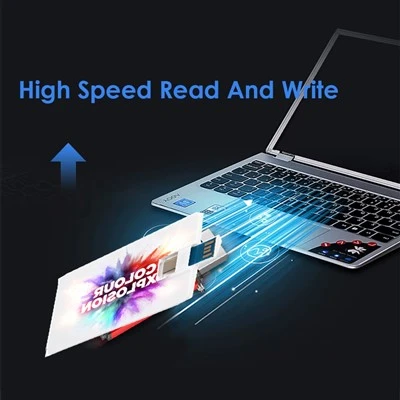
First off, let’s start with the basics. You know that regular USB drive you’ve had since high school? The one with the big Type-A plug that only fits into laptop or desktop USB ports? That thing is basically a one-trick pony now, right? Because everyone’s carrying a phone, a tablet, and a laptop—all different ports. Enter OTG, short for On-The-Go. That’s the tech that lets devices (like phones) act as hosts, so they can connect to other gadgets like USB drives, cameras, even keyboards, without going through a computer. Cool, right? A dual OTG drive takes that OTG concept and crams TWO different OTG-compatible plugs onto one tiny drive. No more fumbling with adapters, no more carrying two separate drives for your phone and your work laptop.
Wait, let’s make that super concrete. Let’s say you’re a student: you take notes on your phone during class, shoot photos of whiteboards, and then you need to edit that stuff on your school laptop. With a regular drive, you’d have to email yourself every file, or upload it to Google Drive, wait for it to sync, then download it on the laptop. Total waste of time, especially if you have bad Wi-Fi in your dorm. With a dual OTG drive? Plug it straight into your phone’s USB-C port (that’s the most common one now, right?) to dump all those notes and photos, then yank it out, plug the other end (the Type-A one) into your laptop, and boom—files transferred in 10 seconds, no Wi-Fi, no extra steps. I’ve seen this save so many people mid-panic, like when someone’s about to turn in a paper and their laptop dies.
Wait, but hold on—are there different types of dual OTG plugs? Yeah, not all dual drives are the same. A lot of people mix up USB-C + Type-A, which is the most popular combo right now, because that works for 90% of the devices people use daily. But there are also old school ones that use Micro-USB + Type-A, for anyone who still has an older Android phone or tablet that doesn’t use USB-C. We even make a few USB-C + Lightning dual OTG drives for Apple users, because yeah, iPhones used to lock down that access but now they support OTG too (you just need iOS 13 or later, quick side note). That’s the biggest question I get from iPhone folks: “can I actually use this with my iPhone?” As long as it’s the Lightning + USB-C dual drive, yep, as long as your iOS is up to date.
Now, let’s get real about why this isn’t just a fancy trend—why it actually solves actual problems. Let’s talk about common pain points I hear from customers every single week. First, adapter chaos. How many adapters have you lost? I’ve probably gone through 10+ in the last two years. One minute you need a USB-C to Type-A adapter, the next you need a Lightning to USB-C one, and you’re digging through your bag like you’re solving a treasure hunt. A dual OTG drive eliminates that entirely—one drive, two plugs, no adapters.
Second, storage space and privacy. A lot of people don’t love uploading sensitive files to the cloud (work docs, personal photos, that embarrassing video you don’t want anyone seeing). A physical drive is way more secure, and a dual OTG one means you don’t have to choose between using it on your phone or your laptop. No cloud, no syncing, just plug and go. I had a freelance graphic designer hit me up last month saying she uses our dual OTG drive for all her client files—she can drop a finished project straight from her tablet to the drive, then plug into her desktop at the studio, no waiting around for transfer.
Wait, but is there a catch? No tech is perfect, right? Let’s be honest. First, make sure your device actually supports OTG. Most modern phones and laptops do, but older ones (pre-2019 for most phones) might not have that feature enabled. How do you check? Usually just plug a regular OTG accessory (like a USB mouse) into your phone’s port—if it works, your phone supports OTG. Also, some super cheap no-name dual drives on Amazon cut corners. They don’t test the compatibility, so they only work with certain devices, or they have way less storage than advertised. As a supplier, I always tell customers to look for drives that are branded (or come from a reputable supplier like us) because they use actual high-quality chips, not knockoff ones that will corrupt your files. That’s a big one—nothing’s worse than a drive that loses all your work because the chip is garbage.
Another thing I get asked: what sizes do these come in? Everything from tiny 32GB ones for photos and notes, up to 1TB and even 2TB for people who need to store videos, huge project files, or entire media libraries. And they’re tiny—you can slip a 64GB one into your jeans pocket, no bulk, no hassle. I even have a customer who uses a 128GB one as a little backup for her kid’s soccer games—she shoots them on her phone, backs them up to the drive every weekend, and plugs it into her TV at family gatherings to watch without loading anything to the TV. That’s the stuff that makes me love this job, right? It’s not just a drive, it’s a tiny solution for daily headaches.
Wait, let’s address another common confusion: is a dual OTG drive the same as a dual drive? No, dual drive usually just means it has two different connectors, but OTG is the tech that makes that connectors work across different devices without a computer. Like, you could have two drives with USB-C and Type-A, but if one doesn’t have OTG capability, it won’t work as a host for your phone—it’ll just charge or do nothing. That’s the key difference. All our dual OTG drives are tested for OTG compatibility on every major brand: Apple, Samsung, Google, LG, laptops like Dell, HP, Lenovo, so you don’t have to worry about that headache.
Let me give you a quick, real example of how this works in practice, ‘cause I hate abstract stuff. Last month, I had a customer named Jake who’s a barista and part-time college student. He told me he was struggling because he had to use his phone for shift schedules, his laptop for homework, and he kept mixing up files. He’d save a homework draft to his phone, then forget to move it to his laptop, or save a work schedule to his laptop and not have it on his phone for his next shift. He got our 64GB USB-C + Type-A dual OTG drive, and now he just drops every new schedule or homework file into the drive when he’s at his desk, and he can access it on his phone while he’s waiting for his shift to start, or plug it into his laptop to work on assignments between customers. He even told me he brought it to a group project last week, and they were able to all view the group’s presentation on the drive from their different phones/laptops in 2 minutes, no sending files back and forth. That’s the exact win I love seeing.
Now, if you’re thinking this might be perfect for you, let me add a few quick tips before you grab one. First, match the plugs to your devices. If you have an Android phone that’s USB-C, get USB-C + Type-A. If you have an iPhone, get Lightning + USB-C. If you still have a super old Micro-USB Android, get Micro-USB + Type-A. Don’t just guess—double check your device’s port, that’s the easiest mistake to make. Second, avoid the super cheap no-name ones. I’ve had so many people come to us after buying a $5 dual drive that died after a week, or corrupted their files. Our drives are built with durable aluminum casings, so they don’t break if you drop them (I’ve tested mine a dozen times, oops), and we test every unit before it leaves our facility. Third, back up your drive, same as you would any other storage. Don’t rely solely on this for your most important files—external storage is great, but it’s not indestructible.
Okay, so now you know what a dual OTG USB drive is: a tiny, two-plug storage device that works with phones, tablets, laptops, no adapters, solves all those stupid little transfer headaches. If you’ve ever stood in front of your device, holding a USB drive and an adapter, trying to figure out how to move a file, this is the thing you’ve been missing.
If you’re ready to grab one, or have questions about which size or type is right for your devices, hit us up to connect for procurement and discussion. We’re here to help you find the perfect drive for your needs, no pressure, just straight answers.
OTG USB Drive References:
- USB Implementers Forum. (2022). USB On-The-Go Specification Revision 2.0.
- Apple Inc. (2023). iOS 17 External Accessory Programming Guide.
- Android Open Source Project. (2023). OTG Host Device Requirements.
- TechHive. (2024). Best Dual OTG USB Drives for Phones and Laptops.
- Consumer Reports. (2023). External Storage Drive Buying Guide: Avoiding Knockoff Products and Corruption Risks.
Shenzhen Tanshuo Technology Co., Ltd.
As one of the most professional OTG USB drive manufacturers in China, we’re featured by high quality customized products. We warmly welcome you to buy cheap OTG USB drive in stock here from our factory. If you have any enquiry about pricelist and free sample, please feel free to email us.
Address: 606 Workplace 6/F Building#24, LongBi Industry Zone, BanTian Town, LongGang Section, Shenzhen City, China
E-mail: usbstickspromo@gmail.com
WebSite: https://www.fondatop-usb.com/
