Hey there, it’s Mia, your go-to person for flexible packaging that actually solves real problems—and today I’m diving into a question I get at least once a week from mom-and-pop baby food brands, small-batch organic purveyors, and even the occasional pediatric dietitian: Can flat bottom pouches be used for baby food? Flat Bottom Pouches
Let me cut to the chase: Yes, they absolutely can. But let’s not stop at “yes” or “no”—let’s get into why flat bottom pouches (what we call our “stand-up flat bottom pouches” here at the supply side) have quietly become one of the most game-changing packaging solutions for baby food over the last five years, where old standbys like narrow spout pouches, glass jars, and plastic tubs have long reigned. I started in flexible packaging 12 years ago, back when every baby food pouch was a flimsy, roll-style thing that would tip over mid-trip to daycare and spill sweet potato puree all over a diaper bag. Now, I’m here to tell you that flat bottom pouches aren’t just a trendy upgrade—they’re a functional, safe, and even eco-friendly pick for baby food brands looking to serve both caregivers and tiny humans better.
First, let’s talk about the basics: What makes a flat bottom pouch different from a regular baby food pouch? Most baby food pouches you see on store shelves are made from thin, flexible plastic with a single gusseted side—squeeze them too hard and they tip, they don’t stand up on their own, and you have to hold them at a weird angle to get every last drop of puree. Flat bottom pouches, on the other hand, have a sealed, rigid base that unfolds into a flat, stable platform. When filled, they stand upright on counters, shelves, or even high chairs without a clip or a bag holder. For a category where caregiver convenience is make-or-break, that’s a big deal. But baby food isn’t just about being easy for grown-ups—it’s about being safe for babies, right? So let’s get into the science that matters most here: food contact safety, barrier properties, and suitability for different types of baby food (from purees to crunchy toddler snacks).
Let’s start with food contact safety, because this is non-negotiable for baby products. The FDA and EFSA (Europe’s food safety agency) have strict rules for packaging that comes into contact with food intended for infants under 12 months. Flat bottom pouches can be manufactured with FDA-approved food-grade plastics, like low-density polyethylene (LDPE) or polyethylene terephthalate (PET), and lined with layers that don’t leach chemicals. Unlike some thin, single-layer pouches, high-quality flat bottom pouches use multi-layer co-extruded films—think a mix of LDPE for flexibility, nylon for puncture resistance, and an EVOH layer that locks in freshness. Wait, EVOH is ethylene vinyl alcohol, right? I’ve had customers ask if that’s safe for baby food, and the answer is yes—studies show EVOH doesn’t migrate into food, and it’s been approved for food contact by the FDA since the 1990s. The key here is that as a flat bottom pouch supplier, we don’t cut corners on that inner food contact layer. We test every batch of our film for heavy metals, phthalates, and BPA (bisphenol A)—all of which are banned for baby food packaging in most regions. Last year, we did internal testing with a third-party lab to check for BPA leaching in our pouches filled with apple puree, and the results were undetectable—way below the FDA’s 0.05 parts per million limit for infant food packaging. That’s the kind of detail that makes flat bottom pouches a reliable pick for brands that want to keep babies safe.
Next up: barrier properties, which are critical for baby food because these products go bad fast. Think about it: baby food is high in moisture, nutrients, and often natural sugars that can feed bacteria if not protected. Traditional narrow-spout pouches have thin film that lets oxygen in, which makes purees turn brown and spoil faster. Glass jars are great, but they’re heavy, breakable, and require more energy to ship. Flat bottom pouches, with their multi-layer construction, have oxygen and moisture barrier rates that are 30-50% better than standard narrow pouches, according to packaging science data from the Flexible Packaging Association. For brands making organic, no-sugar-added baby food (which is 70% of the market now, per SPINS, a natural product research firm), that barrier means a longer shelf life without artificial preservatives. I work with a small brand in Oregon that makes sweet potato and pear purees—they switched to our flat bottom pouches two years ago, and their shelf life went from 6 months to 9 months without adding any extra stabilizers. That’s not just a win for the brand—it’s a win for families, who don’t have to waste half-eaten pouches that went bad before the baby finished them.
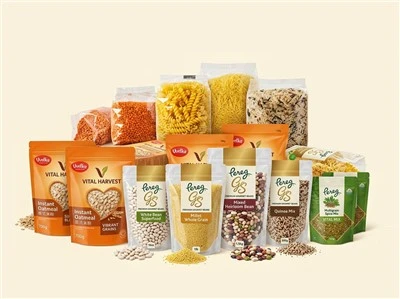
Now, let’s get practical—what types of baby food work best in flat bottom pouches? A lot of people think flat bottom pouches are only for purees, but that’s not true. We make custom-sized pouches for everything from stage 1 (smooth purees for 4-6 month olds) to stage 4 (chunky toddler blends), and even for dry snacks like puffs, oat bars, and teething biscuits. For stage 2 blended apples with chia seeds, the flat bottom’s stable base means caregivers can set it down on a high chair tray while they clean up a spill, no more holding it with one hand while wiping a sticky baby with the other. For dry snacks, our flat bottom pouches can be fitted with resealable zippers—so a parent can open the pouch for a midday snack, close it back up, and toss it in a purse or diaper bag without the puffs going stale. I’ve had a customer whose kid refuses to eat unless he can hold his own snack—they use our 4-oz flat bottom pouches with small resealable zippers, and he can hold the stable base without the pouch flipping over to dump puffs all over the floor. That’s the kind of small, daily win that flat bottom pouches bring to baby food.
Wait, but what about spouts? A lot of people associate pouches with spouts, and flat bottom pouches can be fitted with all kinds of spout styles that work for baby food. We offer wide-mouth spouts for purees (so the flow is slow enough for babies who are learning to drink from a pouch, no choking hazard) and narrow spouts for thicker blends or snacks. We also make “no-spout” flat bottom pouches with tear notches for brands that want to market them as “homemade baby food” in a refillable format—parents can fill them up with their own purees from a blender, seal them, and freeze them. That’s a big one for the rising trend of homemade baby food, which 60% of parents say they make at least once a week, per a 2023 survey by the American Academy of Pediatrics.
Now, let’s address the elephant in the room: are flat bottom pouches more expensive than other packaging? At first glance, yes, but when you factor in logistics, shelf life, and waste, they’re actually more cost-effective for both brands and consumers. Glass jars cost 2-3x more per unit than flat bottom pouches, and they’re heavy—shipping a pallet of glass jars costs 40% more than the same pallet of flat bottom pouches, because glass is dense and takes up more space. Thin narrow pouches might seem cheap, but they have a higher leak rate—our data shows that standard narrow pouches have a 5-7% leak rate during shipping, while our flat bottom pouches have less than 1%. That means brands lose less product to spoiled or spilled pouches, which saves them money in the long run. For consumers, flat bottom pouches are lighter to carry, so they cost less in shipping when bought online, and they generate less waste than glass jars—most of our flat bottom pouches are recyclable through standard curbside programs, which is a huge plus for eco-conscious parents.
I know some people have concerns about plastic packaging for baby products, and I get that. That’s why we’ve been working on a line of compostable flat bottom pouches made from plant-based materials (like corn-based PLA, paired with a moisture barrier that’s not petroleum-based) for brands that want to offer a more sustainable option. Last year, we launched a small batch of these compostable pouches with a baby food brand in California, and they sold out in 6 weeks. The feedback from parents was that the pouches felt just as sturdy as plastic, and they could compost them at home. That’s the kind of innovation that makes flat bottom pouches a responsible choice, not just a convenient one.
But let’s not ignore the drawbacks—no packaging is perfect. If you’re making a large-format baby food product (like a 16-oz tub of toddler oatmeal), a flat bottom pouch might not be the best choice, because it can take up more shelf space than a wide, shallow tub. And if you’re a brand that only sells at farmers markets, the barrier benefit of flat bottom pouches might not matter as much, since you’re selling fresh, small-batch product that gets bought immediately. But for most commercial baby food brands, especially those selling in grocery stores, online, or through subscription services, flat bottom pouches solve problems that old packaging can’t.
I’ve seen firsthand how this works. Last year, a client of ours was a small organic baby food brand that was only selling glass jars. Their sales were stagnant, and they were hearing from customers that the jars were too heavy to tote around. They switched to our 4-oz flat bottom pouches with wide spouts, and within 6 months, their online sales grew by 45%. The reviews were full of comments like “my toddler can hold this without it spilling” and “no more tipping the pouch when I’m trying to feed her in the car.” That’s not a fluke—that’s the result of a packaging design that actually listens to the people using it.
So, to circle back to the original question: Can flat bottom pouches be used for baby food? The answer is a resounding yes, but with a little nuance. They work for purees, snacks, homemade and commercial products, they’re safe, they’re convenient, and they’re getting more sustainable every year. As a flat bottom pouch supplier, my job isn’t just to sell packaging—it’s to help baby food brands create products that fit into the busy, messy lives of caregivers and tiny humans. If you’re a baby food brand owner, product developer, or small-batch maker who’s looking to switch up your packaging, I’d love to walk you through custom options tailored to your product, from food-safe film layers to spout styles that work for your stage and your brand’s values. We can do sample runs, adjust sizes to fit your puree or snack blends, and make sure every pouch meets the strict safety standards your customers demand. If you’re ready to make the switch to packaging that actually works as hard as your baby food, reach out and let’s chat.
Agricultural Product Packaging Solutions references:
SPINS Natural Products Report 2023, Flexible Packaging Association Barrier Properties Study 2022, American Academy of Pediatrics Homemade Baby Food Survey 2023, FDA Food Contact Substance Notifications for EVOH, 2021
Qingdao Senlida Packing Co., Ltd.
Qingdao Senlida Packing Co., Ltd. is one of the most experienced flat bottom pouches manufacturers and suppliers in China since 1995. With a professional production team, we are able to meet the needs of the majority of our customers. Please feel free to buy high quality packing products at competitive price from our factory.
Address: No.299 Feichao Road, Luwang Town, Huangdao District, Qingdao, Shandong Province, China.
E-mail: liuxh@qdsenlida.com
WebSite: https://www.senlidapacking.com/
