If you’ve ever wandered around an industrial plant, a medical supply warehouse, or even a party venue, you’ve probably spotted those big, shiny, cylindrical tanks sitting out back—those are cryogenic storage tanks, and they’re way more versatile than people give them credit for. As a cryogenic storage tank supplier who’s fielded this exact question a hundred times a month, I can already guess what you’re wondering: can these tanks really hold different gases, or are they stuck with one single type forever? Let’s cut through the confusion, skip the stuffy engineering jargon, and get real about what’s actually possible here. Cryogenic Storage Tank

First, let’s recap the basics quick for anyone who’s fuzzy on cryo stuff. Cryogenic gases are just gases that stay in liquid form at super cold temps—usually below -150°C (-238°F) for most common ones. Think liquid nitrogen (LN2), liquid oxygen (LOX), liquid argon, liquid carbon dioxide (CO2), even less common ones like liquid helium or liquefied natural gas (LNG). The tanks that hold them aren’t just insulated metal buckets, by the way. Most have a double-wall design: the inner wall holds the liquid, the outer wall is the visible shiny shell, and there’s a vacuum gap between them, plus insulation material like perlite to keep heat out. That cold is non-negotiable for keeping these gases in liquid state—let any heat creep in, and they boil back to gas, fast.
Now, the big question: can you switch a tank from, say, liquid nitrogen to liquid oxygen, or maybe even liquid CO2? The short answer is… mostly yes, but with a ton of caveats that most random online articles won’t tell you. Let’s break down when it works, when it’s a hard no, and when it’s a “proceed with extreme caution” situation.
First, the easy, low-hanging fruit: tanks designed for similar, non-reactive gases. I see this all the time with small to mid-sized tanks for labs, breweries, or food processing. For example, a tank that’s been holding liquid nitrogen can usually switch to liquid argon without too much hassle. Same with a tank that had liquid CO2 going to a craft brewery switching to nitrogen for draft beer—they pull a quick purge, a pressure check, and it’s good to go. Why? Nitrogen and argon are both inert, they have similar boiling points (LN2 is -196°C, LAr is -186°C), and they don’t chemically react with the stainless steel inner wall of the tank or the valves and piping. Same goes for switching between different grades of oxygen—like medical-grade LOX to industrial-grade LOX, as long as you do a proper cleanout. This is the stuff that’s actually super common, not some weird edge case.
But here’s where things get tricky: switching to reactive gases, or gases with way different properties. Let’s start with oxygen. If you’ve got a tank that’s been used for liquid nitrogen or liquid argon, can you swap it to liquid oxygen? The official, and 100% correct, answer is: not without a full, professional overhaul. Wait, why? Because even tiny traces of residual nitrogen or argon left in the inner tank, valves, or even the vacuum gap can turn into a dangerous hazard when mixed with oxygen. Oxygen oxidizes almost anything it touches way faster than air—if there’s even a tiny bit of oil residue or leftover nitrogen, it can cause a fire or explosion when you run LOX through it. I’ve had a client who tried to do this once on a cheap used tank he bought online, and he ended up damaging a valve so bad we had to replace the whole manifold—cost him way more than if he’d just bought a tank rated specifically for oxygen use. So, switching to oxygen isn’t impossible, but it’s not a flip-and-go job. You need a tank that’s certified for oxygen service, plus a full cleaning, passivation, and pressure test that only a certified tech should do—no DIY shortcuts here.
Next up: gases with super different boiling points, or that need different pressure settings. Let’s say you’ve got a tank that’s set up for liquid nitrogen, which operates at a pretty low working pressure (usually 150 psi or less for standard tanks). What if you want to switch to liquid helium, which boils at a crazy -269°C and needs way more specialized insulation and pressure controls? Short answer: almost never. The insulation in a standard cryo tank isn’t built to hold helium’s extreme cold, so you’d lose way too much gas to boil-off, plus the pressure relief valves aren’t calibrated for helium’s vapor pressure. Same with LNG, which is mostly methane—its boiling point is higher than LN2, and some older tanks have steel that can get brittle at LNG’s temps, plus the tank’s piping might not be rated for the corrosive byproducts sometimes found in LNG. I always tell clients: if you’re switching to a gas that’s more than 10°C off the boiling point of what you were using before, double-check the tank’s specs with your supplier—don’t assume it’ll work.
Another big no-no: mixing gases that can react with each other or with the tank material. Let’s say you had liquid nitrogen in a tank, and you want to put liquid hydrogen in it. Hydrogen is highly flammable, and even tiny residues of nitrogen or oxygen left in the tank can cause a volatile reaction when hydrogen is added. Even worse, if the tank has any carbon steel parts (not just stainless) that were used for holding other gases, some reactive gases can corrode the inner wall over time, leading to leaks or structural failure. I once had a hospital that tried to switch an old industrial nitrogen tank to hold medical-grade hydrogen for a new research lab—we had to shut that idea down immediately because the inner wall had tiny corrosion spots from years of exposure to nitrogen’s impurities, and adding hydrogen would’ve created a ticking time bomb. It’s way better to get a tank rated for hydrogen service from the start, no exceptions.
Now, let’s talk about the fine print that a lot of people miss, especially with used tanks (I see so many clients grabbing cheap used cryo tanks from auctions and then getting confused why they can’t switch gases). First, your tank’s service rating is non-negotiable. Every cryo tank is built with a specific gas in mind, and that rating is printed on the nameplate on the outer shell—you can’t just ignore that. If it’s rated for nitrogen only, it’s not designed for oxygen or hydrogen, period. Second, the turn-around process for switching gases (when it’s allowed) is not just draining and refilling. You have to do a “pump and purge” first: drain all the old gas, then use cold gas (usually the new gas you’re switching to) to flush out any residual leftover, multiple times, until a gas analyzer confirms there’s less than 0.1% of the old gas left. Then you do a pressure test to make sure there are no leaks, and if you’re switching to a different type of gas, you might need to replace gaskets, seals, or valves that aren’t compatible. It’s not a 20-minute job—most professional swaps take a full day, sometimes longer for bigger tanks.
Wait, but what if you’re just talking about temporary transfers, not long-term storage? Like, if you need to move a small amount of liquid nitrogen from one tank to another, can you use the same tank you used for liquid oxygen last week, as long as you purge it really well? Technically, yes, but even then, the industry standard is to keep dedicated tanks for permanent storage to avoid any risk of cross-contamination. Because if you’re storing two different gases, even in small amounts, cross-contamination can mess up your product: for a brewery, a tiny bit of nitrogen in your CO2 can change the taste of your beer; for a medical lab, a trace of oxygen in liquid nitrogen can ruin cell samples. I always advise clients to have a dedicated tank for each gas they store, even if they’re similar—you’ll save yourself the hassle and the extra safety checks in the long run.
Let me throw in a real example from my own customer list to make this concrete. A craft brewery in Wisconsin reached out to me last year because they had a used 500-gallon cryo tank they’d bought used and wanted to switch from CO2 (for carbonating beer) to nitrogen (for making nitro stouts like Guinness). They thought it was a no-brainer, since both are common industrial cryo gases. But when we looked at the tank’s nameplate, it was rated for CO2 only—no oxygen service, and the inner wall wasn’t passivated for nitrogen. We didn’t just sell them a new dedicated nitrogen tank, we also helped them properly decommission their old CO2 tank so they could get a fair price on it. They saved a ton of money by not trying to mess with a swap that would’ve been unsafe, and their nitro stouts have been perfect ever since. That’s the kind of advice we give every day as a supplier—we’d rather sell you the right tank once than have you risk safety or waste money down the line.
Now, let’s bust some common myths that float around online. Myth #1: “All cryo tanks are interchangeable.” Nope—we just covered that with oxygen, hydrogen, and pressure ratings. Myth #2: “You can switch gases as long as you drain the tank.” No, you need to purge and test for residues, especially for reactive gases. Myth #3: “Small tanks are easy to swap, big tanks are hard.” Actually, big bulk tanks for factories have way stricter certification requirements, so swapping gases on a 10,000-gallon tank is way more regulated than swapping on a small lab tank—you’ll need licensed engineers to do that, not just a regular plant tech.
At the end of the day, the biggest takeaway here is: when it comes to cryogenic storage tanks, flexibility is possible, but it’s not universal. The worst mistake you can make is assuming a tank that worked for Gas A will work for Gas B without checking specs, doing safety checks, or getting professional input. As a cryogenic storage tank supplier, my job isn’t just to sell you a tank—it’s to make sure it’s safe for what you need to store, and that it doesn’t create unnecessary risks down the line.
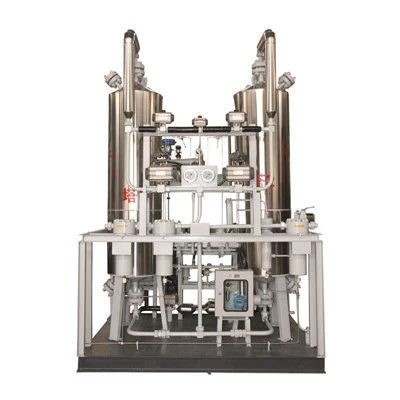
If you’re not sure whether your existing tank can be converted, or you need a new tank built specifically for the gas you’re working with, reach out to our team for a no-obligation consultation. We’ll walk you through every step, answer all your safety questions, and make sure you’ve got the right setup for your needs—no sales pressure, just straight answers from people who’ve been in this industry for years.
Gas Station Management System References:
- Cryogenic Storage Tanks: Design, Operation, and Maintenance. Cryogenic Society of America, 2021.
- Compatibility of Cryogenic Gases with Stainless Steel Vessels. ASME Pressure Vessel and Piping Division, 2019.
- Safe Switching of Cryogenic Storage Media: Best Practices for Industrial and Medical Applications. International Cryogenics Institute, 2020.
Chengdu Hi-tech Panda Energy Technology Co., Ltd.
With abundant experience, we are one of the most professional cryogenic storage tank manufacturers in China. Please feel free to buy high quality cryogenic storage tank for sale here from our factory. Also, customized service is available.
Address: No.1604, 16th Floor, Unit 2, Building 1, No.1700, North Section of Tianfu Avenue, Chengdu High-tech Zone, China (Sichuan) Pilot Free Trade Zone
E-mail: Haikepanda-sos@aliyun.com
WebSite: https://www.haike-energe.com/
