If you’ve ever walked past a steel building, warehouse, or even a prefab garage, chances are you’ve seen Z-purlins and never noticed them. Those skinny, Z-shaped steel beams bolted to the inside of roof trusses and walls? They’re what hold the whole structure up, distribute weight evenly, and keep wind or snow from caving in. And behind every perfectly straight, consistently sized Z-purlin is a Z purlin forming machine—no cutting, welding, or bending by hand required. I’ve been selling these machines for years, and the question I get more than any other is: “How does this thing turn a plain steel coil into a structural part worth thousands of dollars in minutes?” Let’s break it down like I explain it to a new shop owner who’s never bought their first roll former. Z Purlin Forming Machine

First, let’s start with what you don’t see: the raw material. We supply our machines for 12-gauge to 20-gauge galvanized steel coils, basically big spools of flat, pre-coated steel that weigh anywhere from 5,000 to 15,000 pounds. That’s the starting point—no messy cuts, no uneven edges, just a neat roll of metal that feeds into the machine. Here’s where the action kicks off, step by step, no fancy jargon:
Step 1: The Uncoiler & Leveler – No Wavy Metal Allowed
You ever unroll a paper towel from the roll and the first few sheets are all wrinkled? Same problem with steel coils. When a coil is rolled up tight for shipping, the metal has a “set” from being wrapped that way, so it’ll curve or wave if you just yank it straight. The uncoiler’s job is to hold the heavy coil securely, spin it slowly, and feed the steel strip out evenly without kinking. Then comes the leveler—this is a series of 10 to 15 round, adjustable rollers that squeeze the steel back and forth, top and bottom, until it’s perfectly flat. If the metal’s wavy going in, your finished Z-purlin will be too, which is a disaster for construction. I once had a customer who skipped a leveler to save $2,000, and every 10th purlin came out bent so bad he had to scrap the whole run. Don’t do that.
Step 2: The Pre-Punch Station – Cut Holes Before You Shape the Metal
Wait, holes? Z-purlins don’t need random holes, right? They need holes to bolt them to trusses, run electrical conduit through, or attach wall panels. Instead of cutting the steel after it’s shaped (which would warp the Z-profile), our machines have a pre-punch station right after the leveler. It’s a set of hydraulic punches and dies that drill or punch 1-inch, 2-inch, or custom-sized holes exactly where they need to be, at exact spacing. Some even add notches here too, if the customer needs Z-purlins that connect to other parts of the building. Why pre-punch? Shaped steel is thicker in spots, so punching later would require way more force, and you’d risk bending the whole profile. Plus, if the hole is off, it’s impossible to fix without ruining the piece.
Step 3: The Forming Rolls – The Heart of the Machine
This is the magic part. The forming section is a long line of small, rotating rollers, each set at a slight angle to bend the steel just a little bit more each time. Let’s think about a Z-shape: it has a top flange, a middle web (the flat part connecting the flanges), and a bottom flange, right? The first set of rollers bends a tiny lip on the edge of the flat steel. The next set bends up a portion of the flange. Then another set bends the web at a 90-degree angle. Then the other flange. One by one, each roll adds just a fraction of a bend, so the steel never gets stressed enough to crack or warp. If you tried to bend a flat sheet of steel into a Z all at once, it’d kink or break. That’s why forming machines are so precise—each roll is machined to within a thousandth of an inch, no exceptions. I show customers the roll dies in our showroom, and even the tiny grooves for the flanges are super smooth, no sharp edges, so the steel doesn’t tear as it moves through. Oh, and we customize the roll sets for different Z-purlin sizes—some people need 3-inch flanges, some 6-inch, some 12-inch, so we swap the roll packs easily without a full machine overhaul. That’s a big selling point for smaller shops that run multiple sizes.
Step 4: The Cut-Off Press – Snapping It to Exact Length
Once the Z-shape is fully formed, the steel is still moving at a steady speed—usually 30 to 60 feet per minute, depending on the gauge. The cut-off press is a hydraulic or shear tool that sits at the end of the forming line, and it waits for the exact length you input (say, 20 feet, 24 feet, whatever) and slams down to cut the Z-purlin perfectly square. No rough edges, no uneven ends, because the shear blades are aligned to match the web and flanges. If the cut is off even a quarter inch, the purlin won’t fit when the customer goes to install it. Some of our newer machines have automated length measuring too, so you don’t have to stop the line every time to set a new length—you just punch in the number on the control panel and it adjusts the cut-off automatically. That cuts down on downtime a ton.
Step 5: The Runout Table – Catching the Finished Product
Last but not least, the runout table. This is a flat, slatted table that sits right after the cut-off press, and it moves the finished Z-purlins away from the machine so they don’t pile up and get scratched. Some tables have rollers that spin, so the purlin doesn’t get dented as it slides, and some even have a stacker attachment that sorts the pieces by length. If you just let the Z-purlins drop on the floor, you’ll get scratches, dents, and bends, which are all flaws that make the product less useful for customers. That’s why we include a basic runout table with every machine we sell—skipping it saves a little money, but it creates more work and waste for the end user.
Wait, I should mention the control system too, right? It’s not all manual turning knobs anymore. Our machines run on a PLC (programmable logic controller), which is basically a small computer that stores all your settings: purlin size, hole positions, length, how fast the line runs. You don’t have to adjust every roller by hand for a new size—you just select the recipe on the screen, and the motors adjust the roll gaps, punch positions, and cut-off length automatically. That’s a huge upgrade from the old machines I saw 10 years ago, where you’d spend an hour changing over from a 4-inch flange to a 8-inch flange. Now it’s 10 minutes, max.
Now, let’s talk about the little things that matter for reliability, because that’s what our customers care about. For example, the bearings in the forming rolls are sealed, so they don’t get dust or steel shavings in them, which would cause wear and tear. We use high-grade steel for all the structural parts of the machine, so it can handle heavy coils and run for 12 hours a day without breaking down. And one thing I always emphasize: maintenance. A lot of new owners think a roll former is a “set it and forget it” machine, but you have to lube the rolls, check the punch dies, and make sure the uncoiler is aligned every few weeks. I offer a free maintenance workshop with every machine we sell, because a machine that’s not maintained won’t last 5 years.
A common question I get is: “Can this machine make other shapes too?” Sure, some customers switch to C-purlins or even roof panels, but Z-purlins are the specialty here, since they’re the most common for low-slope roofs (you can nest them together for extra strength, which saves on steel costs). That’s why we design our machines exclusively for Z-profiles, so every part is tailored to that exact shape, not a one-size-fits-all that does everything poorly.
Now, if you’re a shop owner looking to get into making Z-purlins, or an existing one wanting to upgrade your machine, let’s be real: this isn’t something you want to buy from a random online seller. You need a machine that’s built for the long haul, has easy-to-find replacement parts, and someone you can call when the line stops at 2 a.m. for a big order. I’ve had customers come to me after buying a machine from a overseas seller that broke down a week after delivery, and they couldn’t get anyone to answer their calls. That’s a nightmare. Our machines are shipped with full installation support, a 1-year parts warranty, and 24/7 phone tech support—no hold times, no runaround.
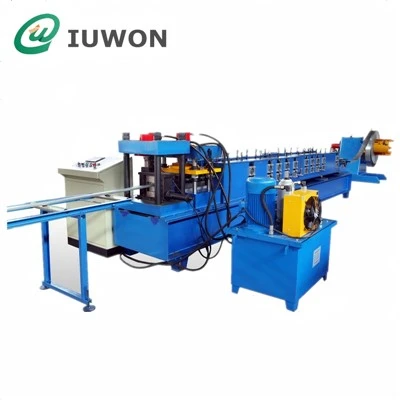
At the end of the day, a Z purlin forming machine is way more than just a bunch of rollers and a saw. It’s a system that turns raw steel into a structural component that keeps buildings standing, protects families, and powers small businesses. I’ve seen customers start with a secondhand machine, work out of a rented warehouse, and grow into companies with 3 machines, serving commercial projects all across the country. That’s the stuff that makes this job worth it. If you’re ready to stop outsourcing your Z-purlins and start making them in-house, or if your current machine is holding you back, hit us up. We can walk you through customizing a machine that fits your production needs, no jargon, no hidden fees.
Purlin Roll Forming Machine References
- Cold Formed Steel Design Manual, American Iron and Steel Institute
- Roll Forming Technology: Principles and Applications, Elsevier
- “Choosing a Z Purlin Forming Machine,” Metal Construction News, 2022
Hanghzou IUWON Technology Co., Ltd.
Address: No.755, Xintangtou Village, Xinjie Street, Xiaoshan District, Hangzhou, Zhejiang
E-mail: sales@iuwon.com
WebSite: https://www.iuwonforming.com/
