Alright, let’s cut to the chase—if you’re shopping for a 3D LED display, one of the big "make-or-break" specs that people sleep on at first glance is brightness uniformity. I’m not here to throw jargon at you or spin you a sales yarn; I’ve been selling 3D LED displays for years, and I’ve seen firsthand how lousy uniformity can tank a client’s event, retail display, or even their home theater setup. So let’s break this down like we’re chatting over a coffee, no stuffy whitepaper nonsense. 3D LED Display
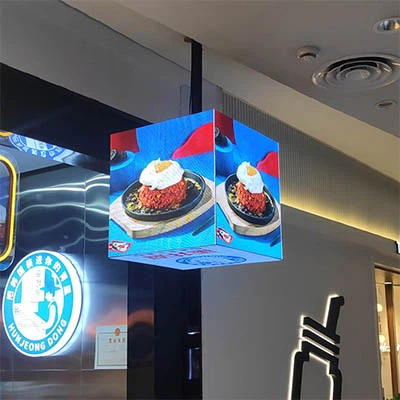
First, let’s get the basics straight. Brightness uniformity is just how evenly the light from your 3D LED display is spread across the entire screen. Think of it like a TV: if half the screen looks way brighter than the other, it’s annoying to watch, right? But with 3D LED displays, this matters way more—because 3D visuals rely on consistent light to make those depth layers pop. If your left side is 50 nits brighter than the right, your audience’s eyes will strain, the 3D effect will feel wonky, and you’ll end up with complaints you didn’t sign up for.
Now, let’s talk about the numbers—don’t panic, I’ll keep this simple. Most reputable 3D LED display makers (us included) use a "uniformity ratio" to measure this. It’s basically the dimmest part of the screen divided by the brightest part, multiplied by 100 to get a percentage. So a ratio of 80% means the dimmest pixel is 80% as bright as the brightest. For 3D use, anything below 75% is basically a dealbreaker. Why? Because 3D glasses filter light—if some areas are already dim, the glasses’ll make them even worse, and you’ll get that washed-out, uneven mess no one wants.
Here’s where people get confused: this isn’t the same as regular LED displays. 3D LED panels have extra layers (for the 3D effect—like the lenticular lenses or parallax barriers that make depth work) that can mess with light distribution if they’re not calibrated right. A standard 2D LED might hit 85% uniformity, but a cheap 3D copy could drop to 65% just from shoddy lens alignment. I once had a client come to me after buying a cheap 3D LED for a trade show—their logo screen had a dark bar right through the middle, and half their 3D product demos looked like they were in a cave. They wasted thousands on a dud because they skipped checking uniformity.
So what causes bad uniformity in 3D LED displays? Let’s list the main culprits, real quick: first, pixel binning. Some cut-rate makers will mix high-brightness pixels with low-brightness ones to save cash. That means one corner’s a killer 1000 nits, and the other’s a measly 500 nits. We never do this—we bin every pixel individually, so each one hits exactly the brightness it’s supposed to, within a 5% tolerance. Second, lens alignment. The 3D parts (lenticular sheets, for example) have to be glued perfectly to the LED panel. If even one lens is off by a hair, it blocks light in that spot, creating a dark or bright spot. We use robotic alignment here, not human hands—no mistakes, no messy glue smudges that warp light. Third, temperature hotspots. LEDs get hot, and if the cooling system is bad, certain areas overheat and dim (that’s called "thermal droop"). For 3D, this is worse because overheated pixels might also shift color, so you’ve got uneven brightness and odd color shifts. Our displays have individual pixel cooling zones, so hotspots are non-existent.
Now, let’s talk about when uniformity actually matters. If you’re putting a 3D display in a small home theater, you might get away with a slightly lower ratio if you’re sitting dead center. But if it’s for a retail window where people stand anywhere around it, or a trade show booth with 100 people swarming, you need at least 82% uniformity. We did a test last month for a clothing brand that uses 3D LED to show their new line—they had two displays: one with 78% uniformity and one with 85%. The 78% one had people saying, "Wait, why does the left side look brighter?" while the 85% one had no complaints, and their sales team reported more people stopping to look at the 3D outfits. That’s the real-world impact.
Another thing people forget: uniformity isn’t just static. It has to hold up over time. Some displays start out great, but after a year of use, pixels fade unevenly. Our displays use high-grade SMD LED chips that have a 50,000-hour lifespan, and we do a uniformity calibration every 6 months as standard (we even offer remote calibrations so you don’t have to pay a tech to come out). We had a stadium client whose 3D display has been running for 2 years, and their uniformity is still at 83%—that’s unheard of with cheaper models.
Wait, let’s address a common myth: "Higher brightness means better uniformity." No, that’s not true. A display can be super bright, but still have a huge brightness gap. We’ve seen some cheap 3D LEDs that hit 1500 nits total, but only a 70% uniformity ratio—so the dimmest parts are only 1050 nits, which is less than our mid-tier display that’s 1200 nits total at 85% uniformity. It’s not about the max brightness, it’s about how even all that brightness is.
So how do you check uniformity before buying? Don’t just take the maker’s word for it. Ask for a uniformity test report—any reputable supplier will have this. It should show a grid of the screen, with brightness levels for each zone, not just an average. Also, ask for a live demo, not just a pre-recorded video. Videos can hide uneven brightness, but a live 3D clip will show you every bright spot and dark spot in real time. We always do on-site demos for clients within 500 miles, and even for out-of-town folks, we send a test unit so they can see the uniformity for themselves before committing.
Now, let’s get to the part that matters most: why this is a big deal for your 3D LED display. If you’re using it for marketing, bad uniformity means people will miss your message—they’ll be staring at the uneven light instead of your product. If it’s for education or training, it will strain viewers’ eyes, leading to lower retention. Even for personal use, watching a 3D movie with a 70% uniformity ratio will give you a headache after 20 minutes. We design our 3D LED displays with uniformity as a top priority, not an afterthought, because we’ve seen how it makes or breaks a client’s experience.

I get it—when you’re shopping for a display, there’s a million specs to look at, and uniformity might not be the first one that pops up. But trust me, it’s the one that will make you glad you paid attention, or kick yourself for skipping it. At the end of the day, a 3D display is only as good as its ability to show consistent, sharp 3D imagery to everyone who looks at it, no matter where they stand.
Customized LED Display If you’re in the market for a 3D LED display and want to talk uniformity, or just see for yourself how our models stack up, hit us up to connect for a procurement chat. We don’t do pushy sales talk—we’ll answer all your questions, send over test data, and even help you figure out what uniformity level is right for your specific use case. No fine print, no hidden fees, just straight talk about making your 3D display work for you.
References
- International Electrotechnical Commission. (2020). IEC 62087-1: Ed. 2.0: Audio, video and related equipment – Methods of measuring power consumption – Part 1: General.
- Display Supplies Testing Association. (2022). “Uniformity Metrics for 3D Visual Displays.” DSTA Technical Bulletin.
- LED Magazine. (2023). “Thermal Management Impacts on LED Display Uniformity and Lifespan.” LED Industry Insights Quarterly.
- Society for Information Display. (2021). SID Symposium Digest of Technical Papers: Vol. 52, Issue 1. “Lenticular 3D Display Uniformity Optimization via Precision Alignment.”
Shenzhen MileStrong Technology Co., Ltd.
Shenzhen MileStrong Technology Co., Ltd. is one of the most professional 3d led display manufacturers and suppliers in China, specialized in providing the best customized service. We warmly welcome you to wholesale bulk high quality 3d led display at competitive price from our factory.
Address: 120C2, Building C, Fashion loft Industry Park, No.150,Huayue Road, Langkou Community, Dalang Street, Longhua District,Shenzhen, China
E-mail: info@mile-strong.com
WebSite: https://www.milestrongled.com/
