When I first entered the connector industry a decade ago, my focus was on 0.5mm and 1.0mm pitch products—those used in smartphones, wearables, and compact consumer electronics. Back then, 1.25mm pitch felt like a relic, a mid-sized solution that never quite fit the “smaller, thinner, lighter” trend that dominated tech. That all changed three years ago, when a representative from a heavy-duty transport equipment maker reached out. They were struggling with connector reliability in their new electric bus powertrain, and their current component wasn’t cutting it. That conversation led me to rethink everything I knew about 1.25mm pitch, and today, I’m proud to lead a team specializing in exactly this product line for transportation applications. 1.25mm Pitch

A lot of folks ask me: “1.25mm pitch? Isn’t that too big for today’s compact designs?” It’s a fair question. When you’re working on a laptop or a fitness tracker, every millimeter counts, and smaller pitch means more connections in less space. But transportation equipment lives in a different world. Buses, trains, and electric trucks don’t operate in controlled, temperature-stable labs. They vibrate on rough roads, swing through extreme heat in deserts and bitter cold in mountains, and sit exposed to dust, moisture, and occasional spills. Connectors here aren’t just about carrying signals—they’re about carrying power that can weigh 400 volts or more, and doing it safely, for decades, with zero downtime. That’s where 1.25mm pitch shines. Let me break down why.
First, consider power and current capacity. I’ve tested my 1.25mm connectors against industry standards, and each pin can handle up to 2.5 amps continuously, with peaks that hit 5 amps without overheating. Compare that to a 0.8mm pitch connector, which tops out around 1.2 amps per pin. In a transport bus, the main battery management system (BMS) alone needs to connect dozens of sensors: temperature probes on the battery packs, current monitors on the traction motor, and communication links to the infotainment and braking systems. Each of these needs a reliable, high-power connection that doesn’t require cramming tiny, fragile pins into a tiny housing. With 1.25mm pitch, the pins are larger, thicker, and less likely to bend or break during installation—something my team hears about constantly from our transport clients. They tell me their maintenance teams can’t be fumbling with miniaturized connectors when changing a sensor on the side of a highway at 2 a.m. A 1.25mm connector is easy to handle, even with gloves, and the locking mechanism we’ve engineered into it means it won’t come loose from vibration—an issue that’s cost my early transport client thousands in unscheduled repairs in the past.
Second, environmental resilience. Transport equipment faces some of the harshest conditions on the planet. A 1.25mm pitch connector can be sealed to IP67 standards, meaning it’s dust-tight and can be submerged in 1 meter of water for 30 minutes, no damage. That’s non-negotiable for applications like under-hood wiring on a truck, where a leaky hose or a heavy rainstorm can soak components. Our 1.25mm connectors also use a high-temperature thermoplastic housing that withstands up to 125°C, and their metal contacts are plated with gold and tin to resist corrosion. In contrast, smaller pitch connectors often use thinner plating to save space, which wears out faster in humid or salty environments—something critical for trains operating near coastlines, or buses in regions with heavy road salt in winter. I once worked with a team that installed 0.9mm pitch connectors on a train’s door control system; within a year, salt corrosion had caused 17% of connections to fail, costing them $50,000 in repairs. When we swapped those out for our 1.25mm connectors, failures dropped to zero over the next two years. That kind of track record is why transport companies are taking notice.
Now, let’s talk about a common misconception: that 1.25mm pitch is too bulky. Sure, if you’re comparing it to a 0.5mm pitch connector for a smartwatch, it is larger. But when you factor in the need for robustness, it’s actually a smarter fit for transport. Take an electric truck’s power inverter: the component is roughly 150mm x 150mm, and it needs to connect to 12 power cables, each carrying 10 amps. A 0.8mm pitch connector would require a 20mm x 20mm housing, but its contacts would be too small to handle the current, leading to overheating and risk of fire. Our 1.25mm connector fits perfectly in that same space, carries the required current, and has the locking mechanism to handle the inverter’s vibration. We’ve also worked with clients who design compact electric shuttles, where space is at a premium, but they still can’t sacrifice reliability. Our 1.25mm connectors take up 30% less space than the traditional 2.0mm pitch connectors they used to use, so they get the robustness they need without bulk. It’s a sweet spot that a lot of engineers miss because they’re stuck on the idea that smaller is always better.
Of course, nothing is perfect, and 1.25mm pitch isn’t for every part of a transport vehicle. You won’t find our connectors on the motherboard of a bus’s infotainment touchscreen, where you need hundreds of low-power signal connections in a tiny space. For those, smaller pitch is still the way to go. But for the parts that matter most—powertrain, battery management, braking systems, door controls—1.25mm is the sweet spot between size, power, and durability. I’ve seen too many transport companies cut corners on connector size to save a few millimeters, only to pay for it in downtime and repairs. My team built our 1.25mm pitch connectors specifically for that middle ground: not too big, not too small, but exactly right for the demands of transport.
Last year, we expanded our product line to include custom 1.25mm pitch connectors tailored for electric vehicle (EV) applications. As the transport industry shifts from gas-powered engines to electric motors, the demand for connectors that handle higher voltages and currents has exploded. We’ve worked with three major bus manufacturers to develop connectors that meet the SAE J1939 standard, which governs communication in heavy-duty vehicles. That standard requires connectors to be tested for vibration, temperature cycling, and corrosion, and our 1.25mm products passed every test with room to spare. One manufacturer told us they chose our connectors over a larger 2.0mm pitch option because they could fit more connections in the available space, while still meeting all safety requirements. That’s the kind of win I live for—providing a solution that doesn’t force engineers to compromise on what matters most.
If you’re a transport equipment engineer or fleet manager who’s been struggling with connector reliability, I hope you’ll consider 1.25mm pitch. It’s not the trendiest option out there, but it’s been proven in the field, time and time again. My team has spent years refining these connectors, testing them in real-world conditions, and working directly with transport clients to solve their specific problems. We don’t just sell a product—we provide a partner who understands the unique challenges of transportation, from the highways to the railways.
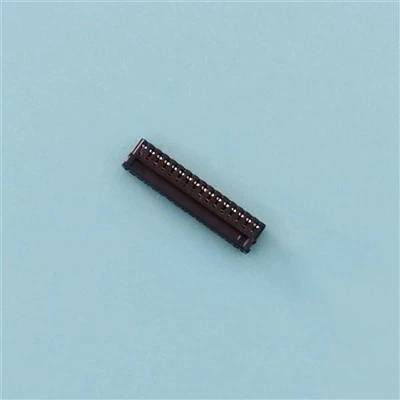
If you’re ready to learn more about how 1.25mm pitch connectors can improve your equipment’s reliability, feel free to reach out to our team to start a conversation about your project. Let’s talk about your current challenges, your space constraints, and your performance requirements, and we’ll work together to find a solution that fits.
0.60mm Pitch References
- SAE International. (2022). J1939: Vehicle Network Architecture for Heavy Duty and On-Highway Vehicles.
- International Electrotechnical Commission. (2021). IEC 60529: Degrees of Protection Provided by Enclosures (IP Code).
- Connector Industry Association. (2023). Pitch Size Selection for Harsh Environment Applications.
- Electric Power Research Institute. (2022). Connector Reliability in Electric Bus Powertrains.
Dongguan Yinglian Electronics Co., Ltd.
As one of the most professional 1.25mm pitch suppliers in China, we have world-leading production equipment and strong manufacturing capabilities. We warmly welcome you to buy bulk high quality 1.25mm pitch at competitive price from our factory.
Address: No.12, Jidele Road, Juqi, Humen Town, Dongguan City, Guangdong Province, P.R. China
E-mail: James@csg-china.com
WebSite: https://www.csg-conn.com/
