Hey there, fellow snooker enthusiasts! I’m a supplier of top – notch snooker balls, and today I’m super stoked to chat about the relationship between the cue tip and the snooker ball. It’s a topic that might seem a bit technical at first, but once you get the hang of it, it’ll really up your game. Snooker Ball

The Initial Contact: A Make – or – Break Moment
When you’re lining up a shot in snooker, that split – second moment when the cue tip hits the snooker ball is absolutely crucial. The quality of this contact can determine whether you sink that difficult pot or end up scratching your head in frustration.
The tip of the cue plays a huge role here. If the tip is in good condition, it grips the ball better. A well – shaped, properly chalked tip creates friction with the snooker ball. This friction is what allows you to impart different types of spin and control the ball’s trajectory. Imagine trying to give a ball sidespin with a worn – out, smooth tip. It’s like trying to grip a bar of soap; it just doesn’t work as well.
As a snooker ball supplier, I’ve heard countless stories from players about how a lousy cue tip ruined their game. One guy told me he was on a roll in a local tournament when his tip started to wear down. All of a sudden, he couldn’t get the same level of control on his shots. His side spins were off, and he couldn’t make those delicate position – play shots.
Spin and Control: How the Tip Shapes the Ball’s Movement
Let’s talk about spin. There are three main types: topspin, backspin, and sidespin. And the cue tip is the magic wand that makes all these happen.
Topspin
When you hit the snooker ball above its center with the cue tip, you’re applying topspin. The tip grabs the ball, and as the ball rolls forward, the topspin makes it keep moving in a forward direction after hitting another ball or a cushion. This is super handy for setting up your next shot. For example, if you’re trying to pot a ball near the jaw of a pocket and want the cue ball to roll forward to a good position for the next ball, topspin is your friend.
Backspin
Hitting the ball below its center puts backspin on it. The cue tip digs in and makes the ball spin backward. When the ball hits something, instead of rolling forward, it can either stop dead or actually roll back towards you. It’s a great technique for getting out of tricky situations or for making precise position – play shots where you need the cue ball to stay close to the pocket you just potted from.
Sidespin
Sidespin is all about hitting the ball to the left or right of its center. The cue tip imparts a sideways rotation on the ball, which makes it curve as it travels across the table. Sidespin can be used to navigate around other balls or to make shots that seem impossible at first glance. It takes a lot of practice to master, but once you do, it’ll impress your friends and give you a real edge in games.
As a supplier, I know that players are always looking for the perfect combination of ball and cue tip to achieve the best spin. A high – quality snooker ball has a consistent surface, which allows the cue tip to grip it evenly. So, if you’re having trouble getting the right amount of spin, it might not just be your cue tip; the quality of your snooker balls could also be a factor.
The Role of Chalk
Chalk is like the secret sauce in the relationship between the cue tip and the snooker ball. You might have heard the pros say, "Always chalk your cue before every shot." And there’s a good reason for that.
Chalk increases the friction between the cue tip and the ball. When you chalk the tip, tiny particles of chalk stick to it. When the tip hits the ball, these particles create more grip, reducing the chances of a miscue. A miscue is when the tip slips off the ball during contact, which can completely mess up your shot.
I’ve seen players who don’t chalk their cues regularly, and it’s like watching a car trying to drive on an icy road. Their shots lack control, and they end up miscuing way more often than they should. So, if you want to make the most of the relationship between your cue tip and the snooker ball, keep that chalk handy!
Wear and Tear: How They Affect Each Other
Both the cue tip and the snooker ball go through wear and tear over time, and this can have a big impact on their relationship.
Cue Tip Wear
As you use your cue, the tip will gradually wear down. The edges might start to get rounded, and the surface can become smooth. When this happens, the tip loses its ability to grip the ball effectively. You might notice that you’re having a harder time getting spin, and your shots are less accurate.
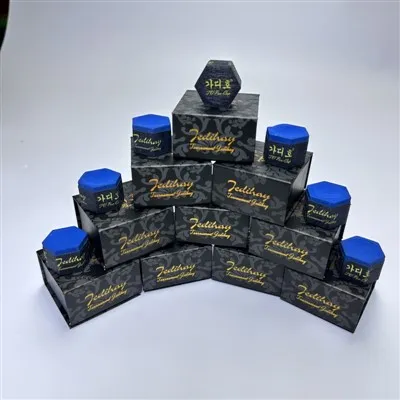
To keep your cue tip in good shape, you need to maintain it regularly. You can use a tip shaper to keep the edges in a nice, sharp shape and a tip scuffer to rough up the surface. It’s like giving your cue tip a little tune – up to make sure it can still have a great relationship with the snooker ball.
Snooker Ball Wear
Snooker balls also wear down with use. The surface can get scratched, and the paint can start to chip. A worn – out ball doesn’t interact with the cue tip in the same way as a new one. The scratches can cause the ball to move unpredictably, and the uneven surface can affect the spin and control you can achieve.
As a supplier, I always recommend that players replace their snooker balls every once in a while, depending on how often they play. If you’re a serious player who plays several times a week, you might want to replace your balls every few months. For casual players, once a year or so should be fine.
Why It Matters for Your Game
Understanding the relationship between the cue tip and the snooker ball can really take your game to the next level. Whether you’re a beginner or a seasoned pro, getting this right can mean the difference between winning and losing.
If you’re just starting out, focusing on the quality of your cue tip and using well – maintained snooker balls can make learning the game a lot easier. You’ll be able to see how spin and control work more clearly, and you’ll be less likely to get frustrated by miscues and unpredictable ball movement.
For experienced players, fine – tuning this relationship can give you that extra edge in competitive games. You’ll be able to execute those difficult shots with more precision and set yourself up for better breaks.
Wrapping It Up and Reaching Out
So, there you have it, folks! The relationship between the cue tip and the snooker ball is a complex but fascinating one. It’s all about how they interact, how they affect each other’s performance, and how you can use that knowledge to become a better player.
Billiard Ball As a snooker ball supplier, I’m always here to answer your questions and help you find the best snooker balls for your needs. If you’re in the market for high – quality snooker balls, or if you just want to chat more about the game, don’t hesitate to get in touch. Let’s make your snooker experience even more amazing!
References
- "The Complete Guide to Snooker" by David Hughes
- "Snooker Skills and Strategies" by John Davis
Taishan Kekelan Trading Co., Ltd.
We’re well-known as one of the leading snooker ball manufacturers and suppliers in China, specialized in providing high quality customized service for global clients. We warmly welcome you to wholesale bulk durable snooker ball for sale here from our factory.
Address: No. 7, Changtang Development Zone, Shuibu Town, Taishan City, Jiangmen City, Guangdong Province, China
E-mail: 2633348912@qq.com
WebSite: https://www.kklcue.com/
