Hey guys, let’s cut to the chase—if you’re in commercial lighting (whether you’re an architect, facility manager, or a spec shopping for your next big project), you’ve probably stumbled across DALI LED drivers before. I’m not here to spam you with jargon or pretend I’ve got all the answers, but as someone who’s been supplying DALI LED drivers for a solid 8 years now, I’ve heard every single question people have about whether this tech actually works for commercial spaces. Spoiler: It does, but there are a few things you need to know before you pull the trigger. DALI LED Drivers
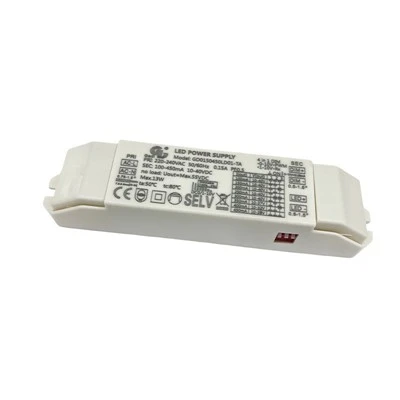
First, let’s get one thing out of the way—commercial lighting isn’t the same as your living room setup. We’re talking big spaces: office floors with 50+ light fixtures, retail stores that need to shift vibes for sales vs. calm rest areas, warehouses with 12-hour shifts, and hospitals where lighting affects patient recovery. If your lighting system’s just on/off or dimmed with a basic wall switch, you’re wasting so much energy, and it’s not flexible enough for what these spaces actually need. That’s where DALI comes in. DALI stands for Digital Addressable Lighting Interface, for anyone who’s not deep in the tech weeds—basically, it’s a smart control system that lets you talk to every single LED driver (and every light connected to it) individually. No more toggling a group of lights and accidentally blasting the warehouse office while you adjust the loading dock.
Let’s start with the biggest question most commercial folks ask: Is it scalable? I’ve had a customer a couple years back who was fitting out a 100,000 sq ft office tower—they thought DALI would be too complicated for that size. Turns out, DALI handles way more than you think. Each DALI bus can support up to 64 devices (those are your LED drivers, sensors, switches, whatever), and you can link multiple buses together if you need even more. We’ve supplied drivers for spaces with over 2,000 fixtures total, and the system still ran like a dream. Unlike some other smart lighting protocols that get jumbly when you scale, DALI’s built for that—no weird lags, no dropping connections every time you add a new fixture. I remember when that office project wrapped; their facilities team told me they could adjust lighting for each floor in 10 minutes flat, instead of the old way where they’d have to reset breakers and mess with analog dimmers. That’s the kind of win that matters for commercial spaces—time saved = money saved.
Next up: Energy savings. Commercial buildings eat up a ton of electricity, and lighting is usually one of the biggest hogs—like, 35% of a typical office’s energy use is lighting, according to the numbers we work with. DALI LED drivers let you do so much here. You can set schedules (like dim hallway lights to 30% after 7 PM, or turn off conference room lights automatically when no one’s in there), link them to motion sensors, and even adjust light levels based on natural daylight coming through windows. One retail customer of ours used DALI to shift their display lighting—bright for daytime sales, warmer and dimmer after 8 PM when it’s just regular shoppers. They reported a 28% drop in lighting energy bills in the first year. That’s not a small number for a business, and it’s all because the DALI driver lets you tune lighting to what the space actually needs, not just what’s set at installation.
Wait, but hold on—some people bring up upfront costs. I get it, when you’re comparing a basic dimmer switch to a DALI setup, it looks more expensive at first. But here’s the thing: DALI LED drivers aren’t just a one-time cost. They last way longer than basic drivers—like, our standard DALI drivers have a 50,000-hour lifespan, compared to maybe 20,000 hours for a non-smart dimmer driver. And then there’s the maintenance side. If one basic dimmer goes bad, you have to trace all the wiring to find it, shut down part of the space, replace it. With DALI? Each driver has a unique address, so if it messes up, you can pinpoint it in 2 seconds via the control panel. No guesswork, no long downtime for a busy commercial space. I’ve had a grocery store client whose old analog system meant they’d have to call an electrician every other month to fix lighting in one aisle. Since switching to our DALI drivers, they’ve had almost zero maintenance calls in 3 years. That adds up to way less hassle and lower long-term costs.
Another big win for commercial: Customization and adaptability. Commercial spaces change all the time. An office might rearrange their cubicles, a restaurant might re-theme its dining areas, a warehouse might shift which zones are used for shipping vs. storage. With DALI LED drivers, you don’t have to rewire anything—you just re-program the system. A school we work with changed their classroom lighting setup last year to support hybrid learning; they didn’t have to pull new wires, just adjusted the DALI controls so each classroom had preset lighting modes (one for in-person class, one for Zoom, one for group projects). That’s a huge deal—if you’re locked into a basic system, any change means tearing up walls and spending thousands. With DALI, you can adapt on the fly, no big extra costs.
But wait, I’m not gonna sit here and say it’s perfect. There are a couple of things you need to get right when setting up DALI in commercial spaces. First, you need a good control system that works with it. A lot of people buy the drivers and then try to pair them with a random app that doesn’t play nice—then they say DALI is buggy. No, it’s just about matching the right controller. We recommend working with someone who knows DALI specifically, not just any smart lighting guy. Second, wiring matters a little more. DALI uses two extra wires compared to basic lighting, but it’s not like running complex data cables—just two low-voltage wires, same as a basic dimmer. And you don’t need a separate network, which is a plus. Also, make sure the DALI drivers you buy are actually certified. Some cheap off-brand drivers claim to be DALI-compatible but don’t meet the standard, so they’ll drop connections or not work with other devices. We only supply drivers that are properly DALI-certified, so our customers don’t run into that headache.
Let’s talk about real-world use cases, because that’s what matters. Hospitals? DALI is great there—you can adjust lighting in patient rooms to be softer at night, brighter during the day, and tie it to nurse call systems so rooms are lit when a patient needs help. Hotels? Lobby lighting that shifts from morning warm to evening bright for events, and guest room lighting that guests can control via their TV or phone, all linked to the building’s system. Warehouses? Motion sensors that trigger lights only when someone’s in a zone, which we’ve seen cut their lighting hours by 40% in some cases. I’ve even had a movie theater chain use our DALI drivers—they can dim the lights perfectly for previews, turn up for when the movie starts, and adjust hallway lighting without bothering the people watching. All that without messing with every fixture individually.
Another thing: Compatibility. A lot of commercial spaces have existing LED fixtures they want to update, not replace the whole thing. Our DALI drivers work with almost every LED fixture on the market, so you don’t have to rip out all your old lights. Just swap out the old drivers for our DALI ones, and you’re set. That’s a huge selling point for retrofits, which are super common in commercial real estate these days. Why spend $100k on new lights when you can swap drivers for a fraction of that cost and get all the smart features?
Wait, let’s address the elephant in the room: Is it overkill for small commercial spaces? Like, a 1,000 sq ft coffee shop or a small retail store. For those, maybe not—basic dimmers might work. But for anything over 5,000 sq ft, or spaces that need multiple zones, scheduling, or energy tracking? DALI is totally worth it. I’ve had a small café test our DALI drivers for their patio and main floor, and they said they save $120 a month on electricity, which is enough to cover the driver upgrade in 6 months. So even for smaller commercial spots, it can make sense, depending on their needs.
As a supplier, I’ve dealt with every mistake people make when choosing DALI LED drivers for commercial projects. Some buy cheap uncertified ones and have to replace them all a year later. Others hire an electrician who only knows old analog systems and messes up the DALI bus setup. The best advice I can give is: Do your research, work with someone who actually knows DALI, and get certified drivers. That’s why we’re here—we don’t just ship drivers and ghost you. We help with the setup tips, recommend controllers that work, and are here if something goes wrong.
At the end of the day, commercial lighting is about balance: it needs to work for the people using the space, save money on bills and maintenance, and be flexible enough to change as the business grows. DALI LED drivers check all those boxes. They’re not a gimmick, they’re a proven system that’s been used in big commercial projects for over a decade now—way beyond the early days when smart lighting was seen as a fancy toy.
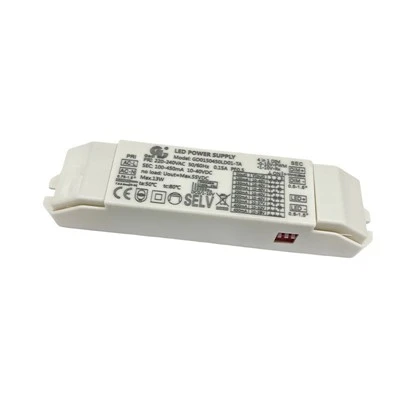
If you’re in the middle of planning a commercial lighting project, or your current lighting is costing you too much in energy and hassle, we can help. We’ve worked with everything from small retail shops to 50,000 sq ft office parks, and we know how to tailor DALI LED driver setups to fit your exact space and budget. Don’t waste another year on a system that doesn’t work for you—reach out and let’s chat about what you need.
Slim LED Power Supply References:
- U.S. Energy Information Administration. (2022). Commercial Buildings Energy Consumption Survey: Lighting Use.
- Digital Illuminating Engineering Society. (2021). DALI Protocol Standard for Commercial Lighting.
- Lighting Research Center, Rensselaer Polytechnic Institute. (2020). Energy Savings from Smart Lighting Controls in Commercial Spaces.
- International Dark-Sky Association. (2019). Best Practices for Commercial Lighting Control Systems.
- Department of Energy. (2021). Guide to Smart Lighting Technologies for Commercial Buildings.
Foshan Gedi Electrnoic Co., Ltd.
As one of the most professional dali LED drivers manufacturers in China, we’re featured by quality products and good price. Please rest assured to buy advanced dali LED drivers for sale here from our factory. If you have any enquiry about cooperation, please feel free to email us.
Address: 4th Floor, Building 8, South District, Huayi Decoration City, No.10, Laixiang Road, Shiwan Sub-district, Chancheng District, Foshan City, Guangdong Province, China.
E-mail: market@gedi-lighting.com
WebSite: https://www.gedi-lighting.com/
