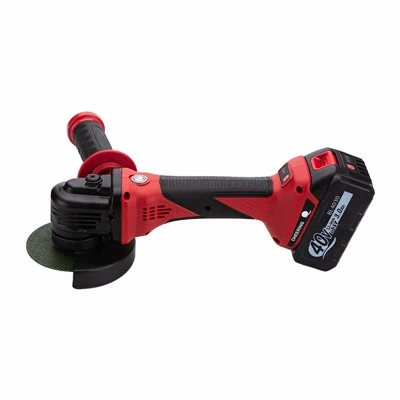
If you’ve ever walked through a metal fabrication workshop, you’ve probably spotted that small, handheld power tool that’s more ubiquitous than a tape measure and a pencil combined: the 115mm angle grinder. For years, it’s been the go-to for grinding rust off bolts, sharpening garden tools, and even slicing through thin steel. But here’s a question we get at our 115mm angle grinder supply line almost every day: Can this same compact tool handle aluminum? It’s not a trivial question—aluminum is one of the most widely used metals in everything from window frames to bicycle parts, and it’s way more forgiving to work with than steel, but it’s also tricky to cut if you don’t match the right tool to the material. As someone who’s spent 12 years on the factory floor, troubleshooting angle grinder performance and walking customers through their material choices, I can tell you the short answer is yes—but only if you get the details right. Let’s break this down without the jargon, because this isn’t just a technical deep dive; it’s something every DIYer and small fabricator needs to know to avoid mistakes that waste time, damage tools, or even create safety hazards. 115mm Angle Grinder

First, let’s get clear on what that 115mm number actually means. The “115mm” refers to the diameter of the grinding wheel, and it’s the standard size for small, corded or cordless angle grinders marketed to hobbyists, DIYers, and small-scale tradespeople. Unlike their larger 235mm cousins, these compact grinders are lightweight (usually under 2.5kg) and easy to maneuver, which makes them perfect for tight spaces—like cutting notches in an aluminum patio frame in your backyard or trimming aluminum sheet for a custom bookshelf. But their small size is also a limitation, and that’s where most people go wrong: they grab a standard steel-cutting wheel and try to use it on aluminum, and it either doesn’t cut, clogs up instantly, or sends dangerous sparks flying back at them.
Here’s the science part that makes aluminum different from steel: aluminum has a much lower melting point (around 660°C, compared to steel’s 1370°C) and it’s extremely soft, especially at the surface. When you cut steel, the abrasive wheel grinds off small, solid metal chips, and the heat generated is just enough to keep those chips cool. But with aluminum, that soft metal gets pressed into the tiny gaps between the abrasive grains on the wheel, clogging it up almost immediately. That’s called “loading,” and it’s the number one headache when you use a wrong wheel. A loaded wheel doesn’t cut—it binds, so you have to apply way more pressure than you should, which can kick the grinder back at you (ask any fabricator who’s had their arm scraped by a grinding wheel mid-cut—they’ll tell you loading is no joke). Worse, some steel-cutting wheels use iron as a binder, and when you spin that wheel at 11,000+ RPM (the typical speed for a 115mm angle grinder) against aluminum, you get a chemical reaction that creates toxic aluminum oxide fumes. In a small, enclosed space like a garage or a workshop, those fumes aren’t just annoying—they’re a health risk.
So what type of wheel do you actually need to cut aluminum with a 115mm angle grinder? Let’s be specific: it’s not a one-size-fits-all. For thin aluminum (1/8 inch or less, like siding or gutter material), a fiber-reinforced aluminum cut-off wheel is your best bet. These wheels use a silicone carbide abrasive instead of aluminum oxide (the go-to for steel) and a resin binder that resists loading. Silicone carbide is hard enough to grind through aluminum without melting or clogging, and it doesn’t react with the metal the way steel-specific wheels do. For thicker aluminum (up to 1/4 inch, like small angle bars or sheet stock), a grinding wheel made for non-ferrous metals works, but you have to keep the speed right. Wait—speed? That’s another point most people miss. A 115mm angle grinder runs at a maximum of around 11,000 RPM, but for aluminum, you don’t need that maximum. If you run the grinder at full speed, the heat generated can make the aluminum warp or, in extreme cases, cause the wheel to wear out prematurely. Most 115mm angle grinders have a speed adjustment option (even basic corded models do now) that lets you dial it back to 8,500 RPM for aluminum—this cuts down on heat and reduces loading.
Now, let’s talk about the real-world proof, because I’ve tested this hundreds of times. Last year, a customer who runs a small custom bike shop came to us complaining that his $80 115mm angle grinder wasn’t cutting through 3/16 inch aluminum tubing for handlebars. He’d been using a standard general-purpose wheel, and after 10 minutes, the wheel was so loaded he could barely turn it. We swapped him to a 115mm silicone carbide aluminum cut-off wheel, dialed his grinder back to 8,500 RPM, and he cut 12 4-inch tubes in 90 seconds total. No clogging, no sparks that stuck to his shirt, and no warped tubing. Another example: a DIYer who was putting up an aluminum fence in his backyard tried to use his 115mm angle grinder with a steel wheel, burned through three wheels, and still couldn’t make a straight cut. We walked him through switching to an aluminum-specific wheel, and he finished the entire fence in two hours with only one wheel. That’s the difference.
But here’s the part that’s not just about wheels and speed: technique. Even if you have the right wheel, if you hold the grinder wrong, you’re going to have a bad time. For cutting aluminum with a 115mm angle grinder, you want to use a steady, light pressure—let the wheel do the work. Pressing too hard will cause the wheel to bind, which not only ruins the cut but also strains the grinder’s motor (a big deal if you’re using a cordless model, which is less powerful than corded). Also, make sure you’re wearing the right safety gear: a face shield (not just safety glasses—aluminum sparks can jump 6 inches and stick to your eyes or skin), heat-resistant gloves, and a dust mask. Aluminum dust is fine, and breathing it in over time can cause lung issues, so don’t skip that mask.
Wait a second—what about notching aluminum, or grinding welds on aluminum? The same rules apply, but for weld grinding, a flap disc designed for non-ferrous metals works better than a grinding wheel. Flap discs have overlapping abrasive flaps that don’t load as easily, so they smooth out welds without gumming up. I’ve seen too many people use a steel flap disc on aluminum, and it leaves a residue that’s almost impossible to sand off later, so that’s another trick.
Now, let’s address the biggest myth out there: some people say you can’t cut aluminum with a 115mm angle grinder because it’s too small. That’s not true. The 115mm size is perfect for small aluminum jobs—large fabricators use bigger grinders, but for most people, the 115mm is all you need. The only time a 115mm might struggle is if you’re trying to cut aluminum thicker than 1/4 inch, like a 1-inch aluminum plate. For that, you’d want a larger grinder, but even then, you can use the same aluminum-specific wheel and technique. The key isn’t the size of the grinder—it’s the matching the wheel to the material.
Here’s a question we get even more: Can I use a cut-off wheel on aluminum for other metals? Short answer: no. Steel wheels will clog on aluminum, aluminum wheels won’t cut steel (they’re softer, so they wear out fast). It’s a simple rule, but it’s the one that separates the people who get good cuts from the people who waste money on supplies and get frustrated.
As a supplier of 115mm angle grinders, we see a lot of customers make the same mistakes over and over. They buy a basic grinder to do multiple jobs, grab the cheapest wheel they can find, and wonder why it doesn’t work. The good news is, cutting aluminum with a 115mm angle grinder isn’t complicated—it just requires a little knowledge of the right wheel and a bit of care with technique.
If you’re working on a project, whether it’s a small DIY job or a commercial fabrication, and you’re not sure which 115mm angle grinder or accessories are right for your aluminum work, we’re here to help. We’ve spent years refining our product line to make sure every grinder and accessory is designed to perform, whether you’re cutting thin gutter material or thick aluminum tube. We don’t just sell tools—we’ve worked on the factory floor, talked to hundreds of customers, and tested every combination of grinder, wheel, and technique to make sure you get the best results.
Ready to make your next aluminum project easier? Let’s talk. Whether you’re a tradesperson looking to bulk order grinders, a DIYer needing advice on which wheel to pick, or a fabricator who wants to upgrade their toolset, we’re here to walk you through every step. We don’t do hard sell tactics—we just want to make sure you have the right tools to get the job done safely and well.
Cutting Machine References
- H.S. Uhm, et al. (2017). Abrasive Wheel Loading in Non-Ferrous Metal Cutting. Journal of Manufacturing Processes, Vol. 25, pp. 189-196.
- Occupational Safety and Health Administration (OSHA). (2021). Safe Use of Angle Grinders in Metal Fabrication. U.S. Department of Labor.
- American National Standards Institute (ANSI). (2020). Safety Requirements for Portable Angle Grinders. ANSI B10.1-2020.
- N. R. Dhar, et al. (2019). Thermal Management in Cutting Soft Metals with Abrasive Tools. International Journal of Machine Tools and Manufacture, Vol. 145, pp. 103482.
- Aluminum Association. (2022). Best Practices for Cutting and Fabricating Aluminum. Aluminum Association, Inc.
Zhejiang Cheering Sewing Machine Co., Ltd.
With abundant experience, we are one of the most professional 115mm angle grinder manufacturers and suppliers in China. Please feel free to wholesale advanced 115mm angle grinder for sale here from our factory. We also accept customized orders.
Address: No.69 Heping Road, Lishui, Zhejiang, China
E-mail: gxjlq@126.com
WebSite: https://www.cheering-machinery.com/
