If you’ve ever stood at a construction site, warehouse loading dock, or industrial fabrication floor, staring at a heavy steel load waiting to be moved, you know that lifting points are more than just welded loops or bolted fixtures. They’re the quiet workhorses that keep operators safe, loads intact, and projects on schedule. As someone who’s spent 12 years as a lifting point supplier—testing designs, troubleshooting field issues, and working with maintenance teams across North America—I’ve seen what happens when maintenance records for these critical components are overlooked. A missing log entry, a skipped inspection, a forgotten proof test can turn a routine lift into a safety incident, or worse. That’s why today, I want to break down exactly what maintenance records you need for any lifting point, why each one matters, and how keeping these records isn’t just a regulatory box to check—it’s a way to protect your team, your assets, and your bottom line. Lifting Point
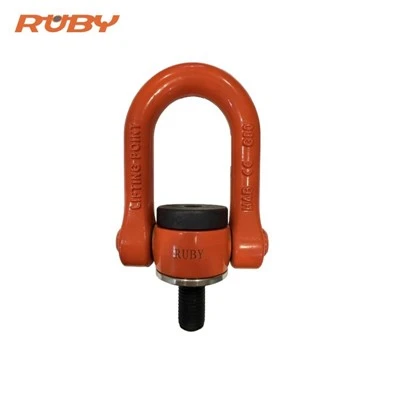
First, let’s start with the basics: what a lifting point even is, for anyone new to the industry. Lifting points are purpose-built attachment points designed to connect cranes, hoists, or slings to loads. They come in two main types: permanent lifting points, which are welded directly to the load (think large steel structural beams, heavy machinery, or precast concrete panels), and temporary lifting points, which are bolted or clamped on for a single lift or short-term use (like those on shipping containers or modular construction units). Whether you buy lifting points from a supplier like me, fabricate them in-house, or rent them, every single one requires structured maintenance and corresponding records. The first record we’ll talk about is the Initial Installation and Qualification Record—and this isn’t just a one-and-done form you file away. This is the foundation of all future maintenance for that lifting point, and you need one per lifting point, not per batch.
Let me explain. When I ship a permanent lifting point to a customer, every unit comes with a unique serial number engraved on its surface. That serial number links directly to its initial installation record, which includes three key pieces of information. First, the load test data: all certified lifting points should undergo a proof load test before leaving our facility, per ASME BTH-1 standards, and that test certificate must be attached. For example, if a 5-ton permanent lifting point is proof tested to 7.5 tons (150% of its rated capacity) and holds for 10 seconds without deformation, that number goes straight into the record. Second, installation details: who welded it (a certified welding inspector’s name and certification number), what material was used for the parent structure, the location on the load, and any angular lift limitations. I can’t tell you how many times I’ve gotten a call from a customer saying their lifting point bent during a lift, only to find out they installed it on a section of the beam that was never intended to handle that load angle—something they would have caught if they had their initial installation record on hand. Third, the type of load it was designed for: is it for vertical lifts only, or can it handle angled or side loads? Lifting points rated for vertical lifts can fail catastrophically if used for side loads, and that limitation has to be in the initial record. For temporary lifting points, the initial record includes the rental date, the unit’s inspection before delivery, and the intended use for that specific lift.
Next up: Pre-Lift Inspection Records, and these are non-negotiable, no matter how small the lift. I always tell my customers that a pre-lift inspection is like giving a lifting point a physical before a big event—and every single inspection has to be documented, no exceptions. The Occupational Safety and Health Administration (OSHA) requires these inspections for every lift over 1,000 pounds, but even smaller loads need them, in my experience. What goes into a pre-lift inspection record? First, a visual check for surface damage: cracks, dents, corrosion, weld spatter, or bent shanks. Last year, a customer of mine skipped a pre-lift on a temporary lifting point for a 2,000-pound pallet of steel parts, and during the lift, a hairline crack that had formed from a small impact during loading spread, nearly dropping the load on a team member. The inspection record would have caught that crack—even a tiny one that’s only visible at certain angles. Second, a check for proper fit: is the sling attached correctly, without twisting or sharp edges that could damage the lifting point? Is the attachment hardware (like bolts for temporary points) tightened to the manufacturer’s specified torque? For permanent lifting points, I always recommend checking for any loose debris around the base, especially in dusty or industrial environments, that could hide small cracks. Third, a confirmation of the lifting point’s rated capacity: is this lift within the limit listed on the unit’s tag and the initial record? It sounds simple, but I’ve seen operators try to lift a 6-ton load with a 4-ton lifting point because they forgot to check the tag—and that’s a failure waiting to happen. Pre-lift inspection records should be filled out by the operator or a designated competent person every single time the lifting point is used, and they need to be stored with the unit’s other paperwork.
Then there are Scheduled Maintenance and Inspection Records, which are for lifting points that are used regularly, not just once in a while. Permanent lifting points on assets like manufacturing machinery or structural beams are subjected to repeated stress, heavy loads, and environmental conditions (like salt air in coastal areas or abrasive dust in mines) that wear them down over time. OSHA and the American Society of Mechanical Engineers (ASME) recommend scheduled inspections every 6 to 12 months, depending on the level of use, and those inspections need formal records. What do these scheduled inspections cover that pre-lift checks don’t? First, a non-destructive testing (NDT) for permanent lifting points, especially if they’ve been in use for more than 5 years or exposed to extreme conditions. NDT methods like magnetic particle testing or ultrasonic testing can detect internal cracks that aren’t visible to the naked eye—something a pre-lift visual check can’t catch. I once worked with a mining customer that had a lifting point on a conveyor beam that had developed a crack inside from repeated heavy lifts of ore; the scheduled NDT inspection caught it before it failed, saving them an estimated $200,000 in damaged equipment and downtime. Second, a load re-test: for lifting points that have been in use for more than 10 years, or have undergone a lift that exceeded their rated capacity (an “overload event” as we call it), a proof load re-test is required. This test has to be done by a third-party certified facility, not just the in-house team, and the results are added to the maintenance record. Third, a review of environmental factors: has the lifting point been exposed to corrosive materials, high temperatures, or impact damage from other equipment? For example, lifting points on a shipyard crane are exposed to saltwater and constant movement, so their scheduled inspections are every 6 months, with extra checks for corrosion. Scheduled maintenance records also include any repairs done to the lifting point—like re-welding a small crack, replacing a bolt on a temporary point, or grinding down a sharp edge that was causing wear. Important note: any repair to a lifting point has to be done by a certified professional, not just a local welder, and that certification number has to be in the record. I can’t overstate this—bad repairs are one of the top causes of lifting point failures, per data from the National Institute for Occupational Safety and Health (NIOSH).
Another critical record that many people forget is the Overload Incident and Damage Event Record. Even if a lift doesn’t end in an accident, any time a lifting point is subjected to a load that exceeds its rated capacity, or is damaged by impact, corrosion, or other events, that needs to be documented immediately. Let’s be clear: a lifting point is not designed to handle overloads intentionally. If a 5-ton lifting point is used to lift 6 tons for even a second, that puts stress on its metal structure that can weaken it over time, leading to a sudden failure later. I had a customer a few years back that tried to rush a lift of a 7-ton generator with 5-ton lifting points, and even though the crane operator stopped the lift before the load was fully off the ground, that overload stretched the metal in the lifting points slightly. They didn’t document the event, and three months later, when they tried to lift another load, one of the points broke, damaging the generator and injuring two team members. The incident report would have shown that the points had been stressed, so they could have pulled them out of service for inspection and re-test, instead of using them again. This record includes the date of the event, the load involved, the reason for the overload or damage, any immediate actions taken (like pulling the point out of service), and the follow-up inspection results. It’s not about blaming anyone—it’s about preventing the same mistake from happening again, and keeping your team safe.
Finally, the Disposition and Retirement Record. Not every lifting point lasts forever, and there comes a time when it needs to be taken out of service permanently—whether it’s because it’s reached the end of its design life, failed an inspection, or the asset it’s attached to is being scrapped. The retirement record is the final step in the maintenance history, and it’s important for compliance and future reference. For example, if another company buys the used asset with the lifting point attached, they’ll want to know its maintenance history to ensure it’s safe to use. The disposition record includes the reason for retirement, the date, any final inspection results, and how the lifting point was disposed of (if it’s damaged beyond repair, it should be cut up and recycled, not reused or sold as is). I always advise customers to never sell a used lifting point without its full maintenance records—nothing erodes trust faster than a supplier selling a used lifting point with no proof it was inspected and tested.
Now, I want to be clear: keeping these records doesn’t have to be a mountain of paperwork that takes hours every week. As a supplier, I recommend that my customers use a digital maintenance log—there are simple, affordable tools that let you input all the records, upload inspection photos, and set reminders for scheduled inspections, so you never miss a date. For example, you can link the serial number of each lifting point to its digital record, so you can pull up its history in 10 seconds, whether you’re on a construction site or in the office. Digital records are also better for compliance—OSHA and other regulatory bodies accept digital records as long as they’re accurate and accessible, so you don’t have to worry about losing paper logs in a construction trailer or warehouse.
If you’re not sure where to start with setting up these records, or you need certified lifting points that meet all industry standards, I’m here to help. We work with contractors, manufacturers, and industrial operators across all sectors, and we provide not just high-quality, tested lifting points, but also guidance on creating and maintaining your maintenance records. Safety is non-negotiable when it comes to lifting operations, and having complete, accurate maintenance records for every lifting point is one of the best ways to keep your team protected, avoid costly incidents, and keep your projects running smoothly. If you’re looking to source reliable lifting points or need support building your maintenance documentation, reach out to discuss your specific needs and how we can tailor a solution for your operation.
Chain Sling References
ASME BTH-1, Design of Below-the-Hook Lifting Devices, American Society of Mechanical Engineers
OSHA 29 CFR 1910.180, Cranes and Derricks
NIOSH Publication No. 2017-109, Lifting and Rigging Hazards in Construction and Industrial Settings
Hangzhou Ruby Imp. & Exp. Co., Ltd.
As one of the most experienced lifting point manufacturers and suppliers in China, we offer a wide range of products with superior quality. We warmly welcome you to wholesale custom made lifting point at competitive price from our factory.
Address: Taoyuan Industrial Park, Puyang Town, Xiaoshan, Hangzhou, Zhejiang, China.
E-mail: Sales5@z2lifting.com
WebSite: https://www.rubylifting.com/
